Immagine cursore
Immagine cursore
Immagine cursore
Immagine cursore
Immagine cursore
Immagine cursore
Immagine cursore
Immagine cursore

Blossom: anatomy of a project

Every collection has a moment when it exists only as a series of intuitions. Before the technical drawings, prototypes and finished products, there are marks, images, references and forms that have yet to find their structure. 

For Blossom, this first stage takes shape in Piero Angelo Orecchioni’s watercolours. Corollas, stems, overlapping geometries and areas of colour create an open visual vocabulary in which nature is not reproduced literally, but translated into proportions, contrasts and movement. 

At the origin of the collection there is also a personal memory. Orecchioni recalls the flower garden tended by his mother, the succession of the seasons and her habit of cutting flowers while keeping the stems as long as possible. From this comes the idea of a bloom capable of bringing life and light into a room.  

But the project does not take shape on paper alone. 

Entering the Workshop 

In Orecchioni’s account, artisan workshops are places where one can “dock and lose oneself”: spaces in which different periods, styles, materials and objects continue to coexist.  

The Bronzetto workshop therefore enters the project as an active presence. Brass profiles, suspended structures, moulds, models and elements preserved in the archives are not simply part of the production setting; they become part of the research itself. 

Blossom also grew out of the rediscovery of old moulds and models from the Bronzetto family’s historical archive. 

Orecchioni’s vision met Michelangelo Moroni’s technical development and the work of the workshop’s artisans, gradually becoming a collection of lighting and furniture pieces.  

This is the point at which the drawing begins to engage with the material. The imagined forms must find balance, support weight, direct the light and adapt to the possibilities offered by the different techniques.

From Mark to Construction 

The initial sketches give way to more precise drawings. 

Dimensions, radii, sections, connection points and studies of proportion begin to appear. The same language is tested across different typologies: pendants, wall lights, table lamps and floor lamps. 

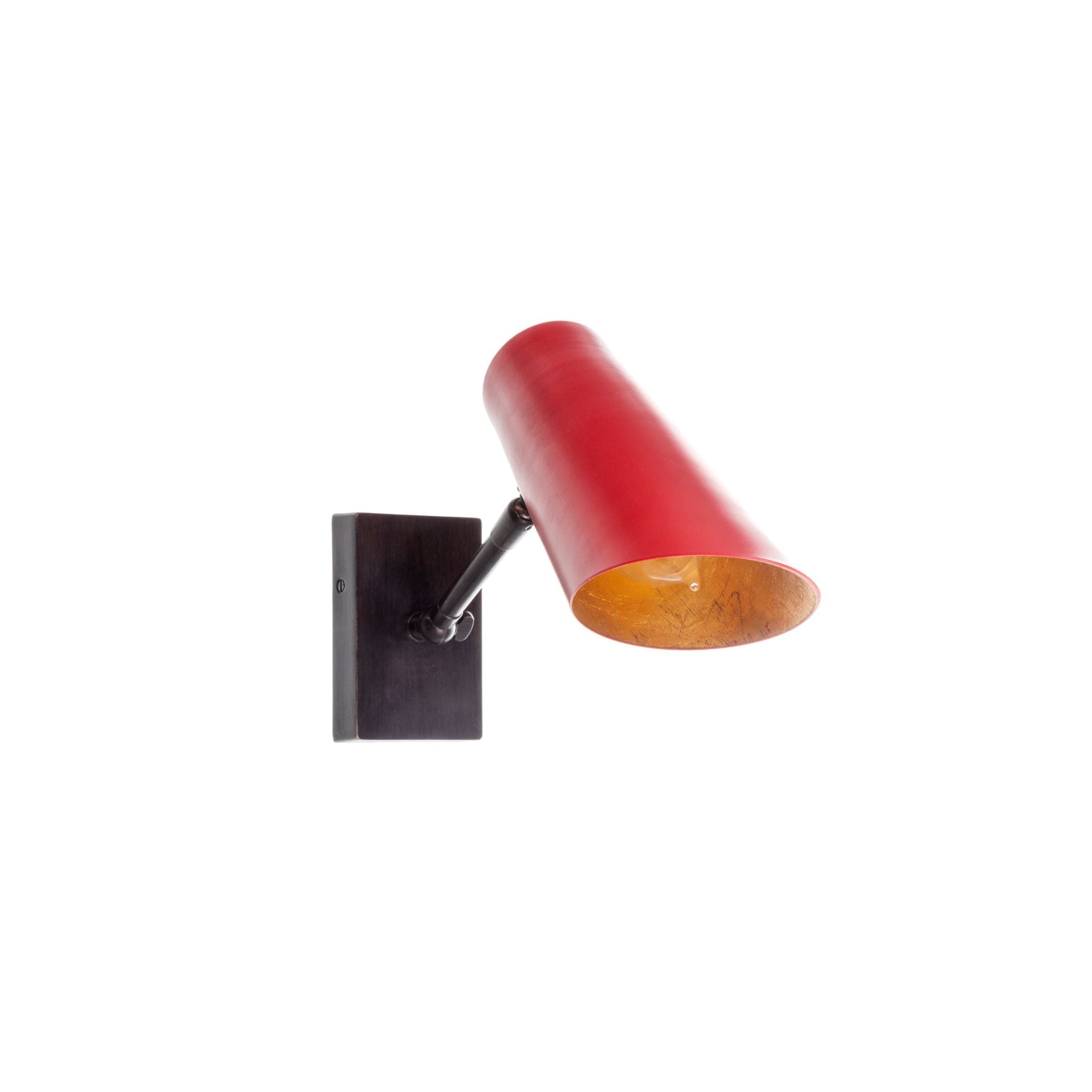
Certain elements return from one product to another: slender stems, branching arms, circular or conical forms, and light sources arranged like flowers along a structure.

In the technical drawings, however, every intuition must be translated into a workable solution. 

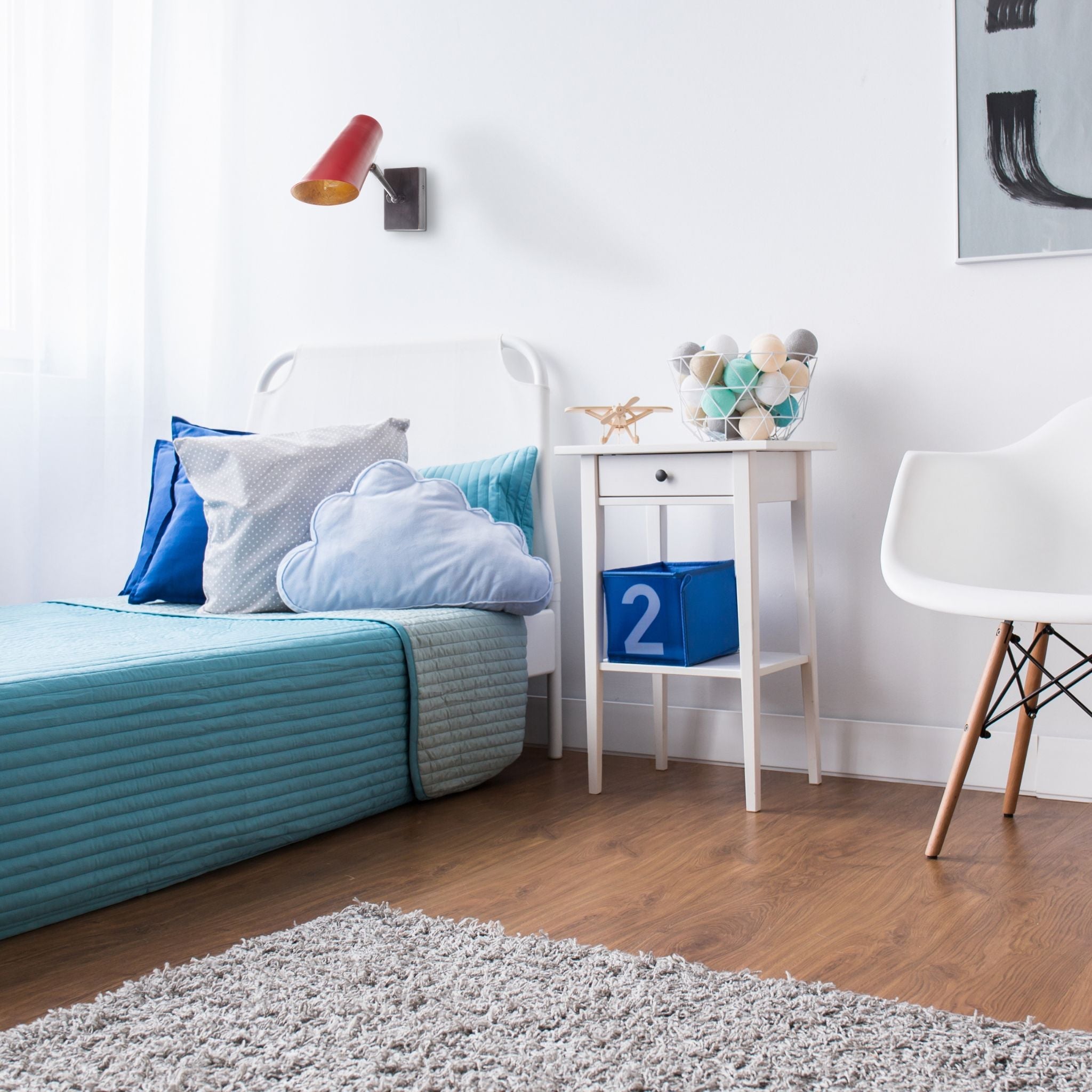
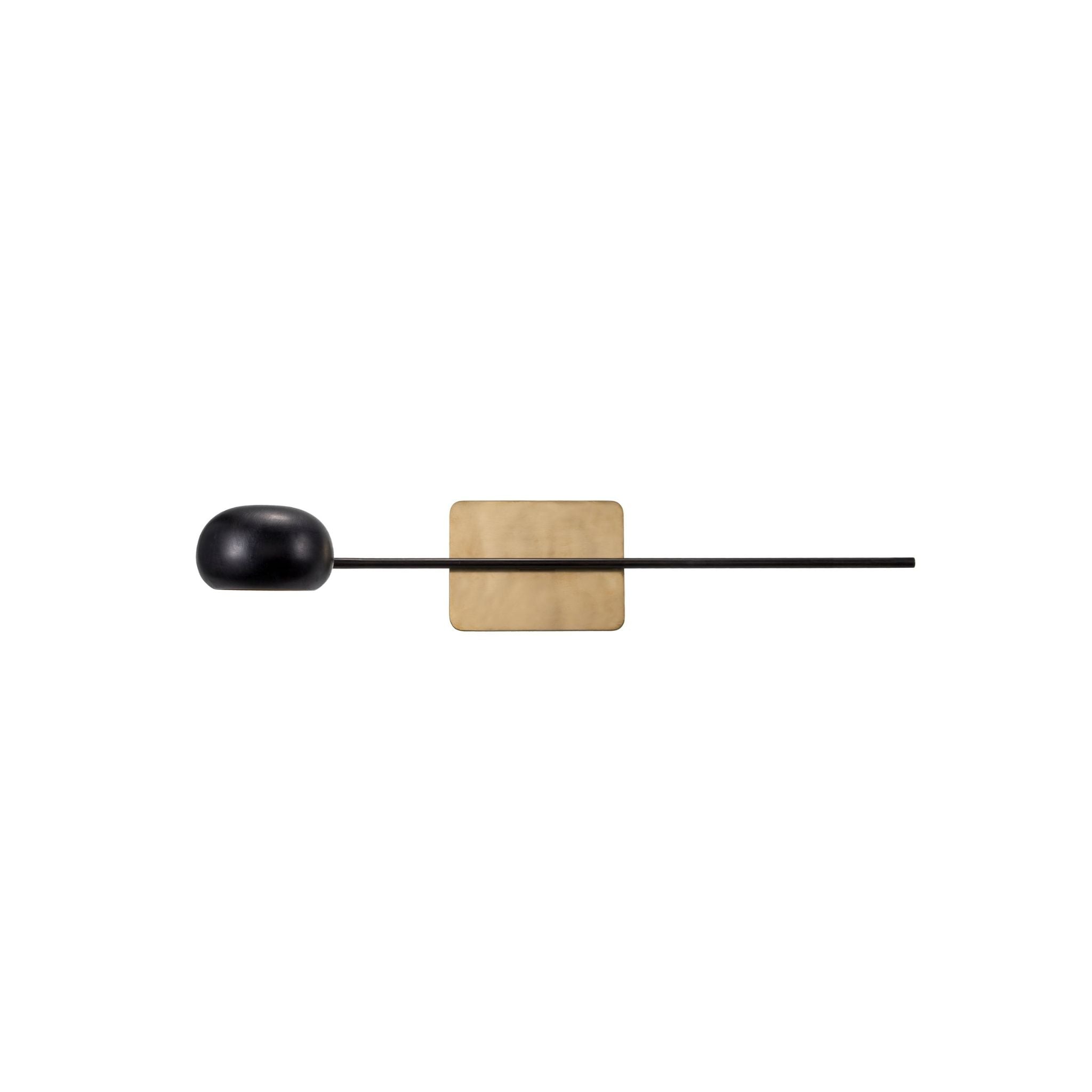
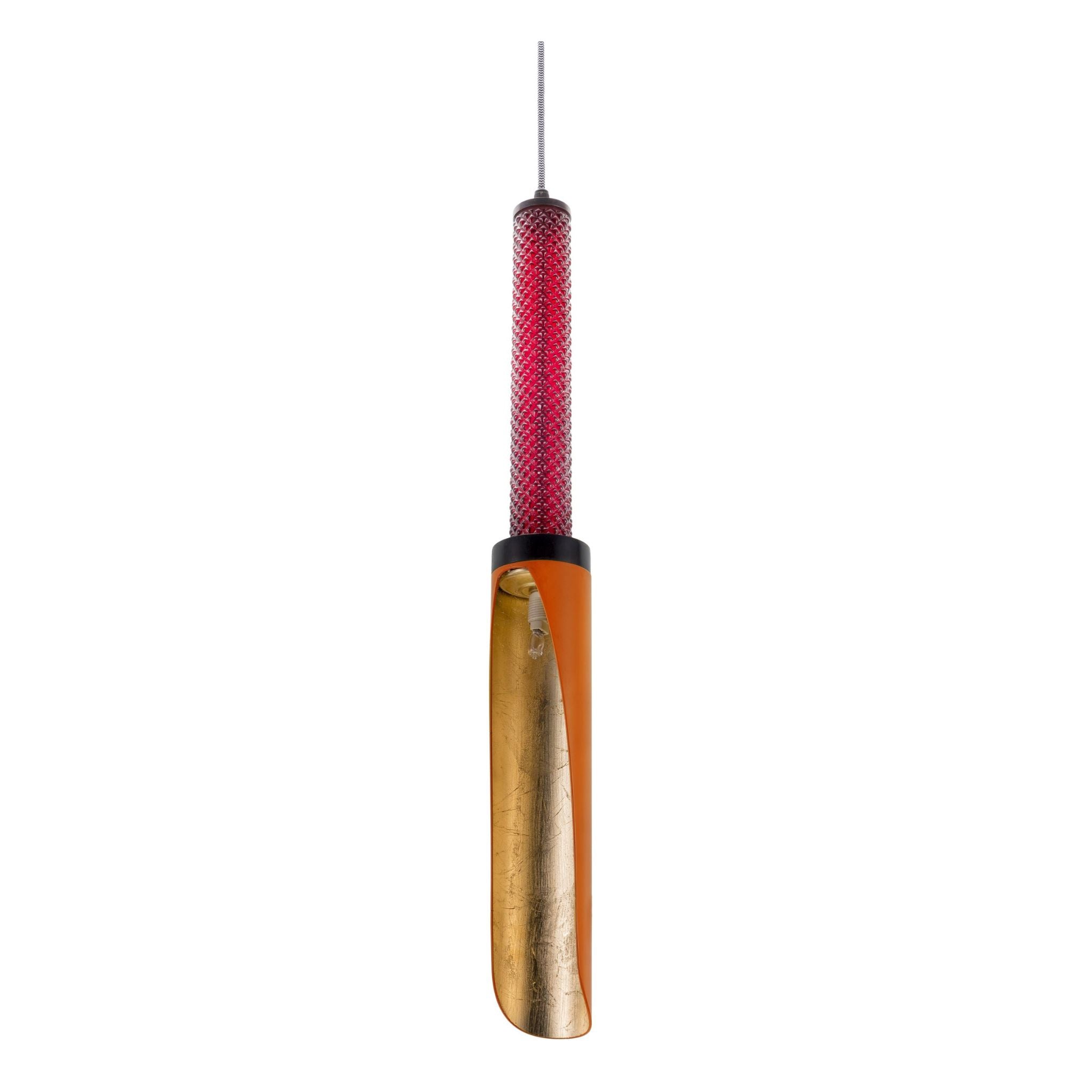
The floor lamp is examined through different views and dimensions; the pendant becomes a linear structure from which several light sources branch out; the wall lamps are also conceived as modular compositions.  

The project also expands beyond lighting. Side tables and furniture pieces adopt thesame system of slender frames and coloured surfaces, combining brass, glass and wooden supports.  

Blossom thus develops as an open system in which different objects share the same vocabulary without becoming identical.

Materials, Forms and Colours 

Colour does not enter the process at the end as a simple finish. It is present from the first watercolours and continues to guide the development of the collection. 

Green, red, blue, turquoise and yellow alternate with black surfaces, brass details and gold-leaf interiors. Materials also help define the differences between the products: metal, glass, marble and components drawn from different techniques are combined within the same object. 

For this reason, Blossom has been described as an “anthology of forms and colours”: a collection in which lamps and furniture pieces do not follow a single model, but form a whole through variations, juxtapositions and recurring references.  

The names of the different series—Tulip, Rose, Camelia, Tree and Float Flower—continue the reference to blooming, while each interprets it through a different structure and function. 

The Project Before the Product 

Looking at Blossom through sketches, workshop photographs and technical drawings reveals part of the work that tends to disappear once the finished product is complete. 

The collection did not emerge through a linear transition from an idea to its execution. It developed through an exchange between imagination and construction, personal memory and archive, the freedom of the mark and technical precision. 

Within this process, the workshop did more than manufacture what had been drawn. It contributed, proposed solutions and made possible the transition from an intuited form to an object capable of inhabiting a space. 

Blossom is the result of this dialogue: a project whose finished pieces still retain traces of the watercolours, the materials discovered, the tests carried out and the decisions made along the way.